Pillows · Fit Guide
Memory Foam Pillow Loft: A Fit Guide for Side, Back, and Stomach Sleepers
The right pillow height is less about choosing a label—low, medium, or high—and more about how your head, neck, shoulders, and mattress meet. Use this practical guide to assess memory foam pillow loft for your sleep position, body proportions, and preferred sleep surface.
What pillow loft means
Pillow loft is the height of a pillow as it supports your head. In everyday terms, it is how much the pillow lifts your head away from the mattress once you lie down. Loft is not always the same as the pillow’s advertised thickness: a tall pillow may compress substantially under weight, while a denser or more resilient one may retain more of its height.
That distinction matters with memory foam. Depending on its construction, foam can contour around the head and neck, compress under pressure, and respond gradually as you settle into it. Some pillows use a single molded piece; others contain shredded or adjustable foam that can be removed or redistributed. The shape and firmness of the foam influence the support you feel, but they do not make one loft suitable for everyone.
A useful target is a comfortable, neutral head-and-neck position. Your pillow should fill the space between your head and the mattress without pushing your chin toward your chest, tipping your head backward, or letting it fall markedly toward the bed. This is a fit principle, not a promise that a particular pillow will treat pain or improve a medical condition.
Start with your usual sleep position
Sleep position offers a helpful first clue because it changes the space a pillow needs to fill. Consider the position in which you spend most of the night, rather than the position you happen to be in when you first lie down. If you change positions often, look for a pillow that remains comfortable through those transitions, or consider whether an adjustable design makes it easier to fine-tune the height.
Side sleepers: fill the shoulder-to-head gap
When you lie on your side, the shoulder rests on the mattress and creates a gap between the sleeping surface and your head. A pillow with more loft may help fill that space, keeping the head from angling down toward the mattress. The amount needed depends in part on shoulder width, how deeply your shoulder sinks into the bed, and the shape of the pillow.
Rather than assuming every side sleeper needs a high-loft pillow, assess your alignment. If the pillow seems too low, your head may dip toward the bed. If it seems too high, your head may tilt upward and your neck may feel crowded. Aim for a position in which your head feels supported in line with your upper body, without having to brace or consciously hold it there.
Shoulder width can be a useful starting point, but it is not a precise measurement that determines a single correct pillow. The distance to fill changes with the mattress: a softer surface may let the shoulder sink farther in, reducing the gap, while a firmer surface may allow less sink. The pillow itself also compresses, so its uncompressed height does not tell the whole story.
Back sleepers: support the curve without lifting too far
Back sleepers often find a lower or moderate loft more comfortable than a very tall pillow. The aim is to support the head and neck without pushing the head forward. If the pillow is too high, it may bring the chin toward the chest; if it is too low, the head may tip back or feel insufficiently supported.
Memory foam’s contouring can be helpful for some people because the material may settle around the head and neck rather than behaving like a loose, uniform cushion. Still, contouring does not automatically mean the pillow is correctly sized. Check how the pillow feels after you have relaxed into your normal position, not only during the first few seconds of testing it.
People who move between their back and side may prefer a moderate profile or an adjustable fill that can be refined over time. A pillow that feels comfortable for back sleeping can seem too low when you roll onto your side, so test both positions if you regularly alternate.
Stomach sleepers: keep the profile minimal
Stomach sleeping generally calls for very little pillow height. A tall pillow can lift the head and increase the angle at the neck, while a thinner, softer profile may reduce that upward tilt. Some stomach sleepers prefer to use no pillow under the head, though comfort and individual circumstances vary.
When choosing memory foam, pay particular attention to how much it compresses. A pillow that looks low in the store may still feel substantial if the foam holds its shape under your head. Conversely, a thicker pillow made from softer, more compressible material may settle to a lower effective height. The goal is not to force a rigid posture, but to avoid adding unnecessary lift.
The mattress changes the equation
Pillow loft cannot be judged in isolation. Your mattress affects how deeply your shoulder, torso, and head settle into the sleep surface. On a plush mattress, the shoulder may sink farther when you sleep on your side, narrowing the space the pillow needs to fill. On a firmer mattress, the shoulder may remain closer to the surface, leaving a larger gap.
This is one reason a pillow that works well on one bed may feel wrong after a mattress change. The pillow has not changed, but the relationship between your head and the sleep surface has. If a familiar pillow suddenly feels too high or low, consider the mattress feel and your position before assuming the pillow is defective.
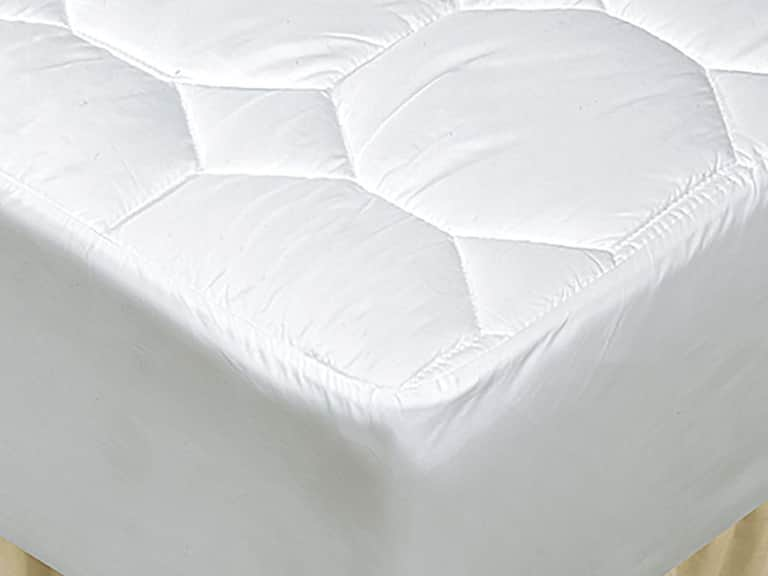
Mattress toppers and mattress pads can also subtly alter the way your body settles. A cushioned layer may change pressure and sink, particularly around the shoulder. When testing pillow fit, use your normal bedding and mattress setup. Testing on a showroom bed or a different surface may not reflect what you experience at home.
How to assess your neck alignment at home
A simple, patient check can tell you more than a loft label. Lie down in your usual position and allow your muscles to relax. Notice whether your head feels balanced, whether the pillow supports the space beneath your neck, and whether you are tempted to fold, bunch, or push the pillow into a different shape. Those small adjustments may be clues that the height or shape is not quite right.
- Check your head position. From the side, consider whether your head appears to continue the line of your upper body instead of being noticeably tipped up or down.
- Notice the shoulder gap. For side sleeping, the pillow should bridge the space between shoulder and head without making the neck bend toward or away from the mattress.
- Pay attention to comfort, not a ruler alone. Measuring the pillow’s height before use cannot account for compression, contour, or how deeply you sink into the mattress.
- Try your regular positions. If you sleep on both your back and side, test each one and note whether the pillow remains supportive when you turn.
- Give adjustments time. If the pillow has removable fill, make modest changes rather than removing a large amount at once. Recheck the fit after each change.
Keep the assessment practical. A mirror or a trusted person’s observation may help you see whether your head is visibly tilted, but the most useful signals are your own comfort and whether you can rest without continually repositioning the pillow. If discomfort is persistent, severe, or concerning, consult an appropriately qualified health professional rather than relying on pillow changes as treatment.
Memory foam shape, firmness, and feel
Two pillows with the same listed loft may feel quite different. Foam density, firmness, cut, and overall construction affect how much the pillow compresses and how it distributes pressure. A molded contour pillow may have distinct raised and lowered areas. A shredded-foam pillow may allow the fill to shift. A solid block may provide a more consistent shape but offer fewer ways to change the profile.
Firmness and loft are related in practice, but they are not interchangeable. A firm pillow may hold more of its height under pressure, while a softer one may compress more. Yet the result depends on the material and construction; a soft pillow can still be too tall, and a firm pillow can still be too low. Look for information about both the pillow’s shape and its support, then judge it in your own sleeping position.
Contoured memory foam pillows are sometimes designed with a higher ridge for the neck and a lower area for the head. This shape may suit some sleepers, but it can feel unfamiliar or poorly matched to others. The contour should meet your body naturally. If you must angle your head to fit the molded shape, or if the raised section presses uncomfortably, the design may not be the right match for you.
Adjustable memory foam pillows have a different advantage: they can let you alter the amount of fill. This can be useful when you are uncertain about the ideal loft or change positions during the night. Adjustability still requires a little experimentation. Keep track of what you remove, make changes gradually, and store spare fill according to the product’s instructions.
Common signs that the loft may be off
No single sensation proves that pillow height is the cause of discomfort, but recurring patterns can guide your next test. A pillow that seems too high may leave your head tipped forward, while a low pillow can allow the head to fall back or, for side sleeping, toward the mattress. A poor fit may also prompt repeated folding, bunching, or repositioning.
- For side sleeping: the head seems to dip toward the mattress, or the neck feels pushed upward by the pillow.
- For back sleeping: the chin is pushed toward the chest, or the head feels tipped too far backward.
- For stomach sleeping: the pillow creates noticeable lift beneath the head when a flatter surface feels more natural.
- For combination sleeping: the pillow feels appropriate in one position but awkward in another, and you repeatedly rearrange it after turning.
These observations are prompts for a fit check, not a diagnosis. Neck discomfort can have many causes, and pillow height is only one part of a sleep setup. If changing pillow position or loft does not improve comfort, consider the broader situation and seek professional advice when appropriate.
A practical pillow-loft selection checklist
Before choosing a memory foam pillow, compare your sleeping habits and the product’s construction. A few deliberate questions can make the decision more manageable than relying on broad claims about the “best” pillow for a particular position.
- What position do you sleep in most? Begin with side, back, stomach, or a combination, then account for the positions you return to during the night.
- How wide are your shoulders? For side sleeping, shoulder width can influence the gap between your head and the mattress, though it is not the only factor.
- How does your mattress feel? Consider whether your shoulder sinks deeply or stays closer to the surface.
- How much does the foam compress? Ask whether the pillow is molded, shredded, or otherwise adjustable, and look beyond its uncompressed measurements.
- Can you adjust the fit? Removable fill may be useful if you are between profiles or tend to change positions.
- What care does it require? Check the manufacturer’s directions for washing, airing, and protecting the foam. Many foam cores should not be machine-washed.
- What is the return or trial policy? When available, a reasonable home-testing period can be valuable because pillow fit is personal and the home mattress matters.
FAQs about memory foam pillow loft
Is higher loft always better for side sleepers?
No. Side sleepers often need enough height to fill the shoulder-to-head gap, but the right amount varies with shoulder width, mattress softness, pillow compression, and body shape. A pillow that is too high can tilt the head in the opposite direction, so assess the actual position rather than choosing the tallest option.
What pillow loft is best for back sleepers?
Many back sleepers start with a lower or moderate profile, aiming to support the head and neck without pushing the head forward. There is no universal measurement: the pillow’s contour and compression, as well as the mattress, affect how it feels once you lie down.
Should stomach sleepers use a memory foam pillow?
Some stomach sleepers prefer a very thin pillow or none under the head, because extra height can create more upward tilt. If you choose memory foam, consider a low profile and check how much it compresses. Personal comfort and any guidance from a health professional should take precedence over a general rule.
Does pillow loft mean the same thing as pillow firmness?
No. Loft refers to height under the head; firmness describes how resistant the pillow feels to compression. Both influence fit, but one does not determine the other. A tall soft pillow and a lower firm pillow can produce very different experiences.
Can I change my pillow loft without buying another pillow?
If the pillow has removable or adjustable fill, you may be able to change its effective height. Make small adjustments and test the pillow in your regular sleeping positions. Do not cut or alter a solid foam pillow unless the manufacturer specifically allows it, since changes may damage the product or affect its support.
How often should I reassess pillow fit?
Reassess when your mattress changes, your usual position shifts, the pillow loses its shape, or it no longer feels comfortable. Pillow materials and construction wear differently, so follow care guidance and check for persistent flattening or uneven support.
The simplest measure is a natural fit
A well-matched memory foam pillow does not need to announce itself. It should support your head without making you work to find a comfortable position. For side sleepers, that often means enough height to bridge the shoulder gap; for back sleepers, a profile that supports without pushing the head forward; and for stomach sleepers, minimal lift. Mattress feel, shoulder width, foam response, and personal comfort refine those starting points.
Choose a pillow by how it behaves beneath you, not only by its advertised loft. Test your usual positions, notice the direction of any tilt, and make small adjustments where the design allows. A thoughtful fit is personal: the aim is not a perfect-looking number, but a comfortable, neutral-feeling place for your head and neck to rest.